


The Machine Brings Nearly 40 Years of Pink Floyd to the Garde
The Machine Brings Nearly 40 Years of Pink Floyd to the Garde Friday, Oct. 9, with a band that has spent almost four decades doing something more ambitious than simply reproducing Pink Floyd’s biggest hits.
The New York-based quartet reaches across Pink Floyd’s entire career, mixing the songs virtually everyone knows with album tracks and deep cuts that rarely turn up in conventional tribute shows. Just as importantly, The Machine has developed a reputation for leaving room inside those songs for improvisation.
That distinction has helped keep the group on the road since 1988, making The Machine one of America’s longest-running Pink Floyd tribute acts.
At the Garde, that means a concert built for the people who know The Dark Side of the Moon, Wish You Were Here, and The Wall, but also for the Pink Floyd fan who wants the band to keep digging.
This Goes Back to 1988
The Machine began with drummer Tahrah Cohen and guitarist and vocalist Joe Pascarell, initially playing as a local cover band in the Rockland County, New York area.
Pink Floyd wasn’t originally the band’s entire purpose.
But the response to its Floyd material helped push The Machine toward becoming a dedicated tribute act, and by the end of the 1980s the group was pursuing it full time.
That puts the band’s history in an interesting context.
The Machine formed only a few years after Roger Waters left Pink Floyd and while David Gilmour, Nick Mason and Richard Wright were still touring arenas as Pink Floyd. This wasn’t a tribute assembled decades after the original band’s story had ended.
The Machine has now been performing this music for nearly as long as Pink Floyd itself existed as an active band.
They Don’t Just Play the Obvious Songs
A Pink Floyd tribute could easily build a set around Money, Another Brick in the Wall, Wish You Were Here and Comfortably Numb and call it a night.
The Machine has deliberately gone further.
The band describes its repertoire as reaching across Pink Floyd’s 15 studio albums, pairing familiar material with obscure selections. Over the years, it has performed complete albums, taken audience requests and even staged what it calls an A-to-Z show, selecting a Pink Floyd song for every letter of the alphabet.
That approach matters with Pink Floyd because the band’s catalog changed dramatically over time.
The psychedelic experimentation of the Syd Barrett years doesn’t sound much like the enormous conceptual records of the 1970s. Those, in turn, lead into the increasingly fractured Waters-era Pink Floyd and the later Gilmour-led band.
The Machine has enough material in its repertoire to move around inside all of it.
And unlike a production constructed to reproduce the same set note-for-note every night, improvisation remains part of the band’s identity. The group specifically points to the looser, exploratory performances of early-1970s Pink Floyd as an influence on its live approach.
Four Musicians Have to Create a Very Big Sound
The current Machine is a quartet.
Tahrah Cohen remains behind the drums as the group’s founding member. Scott Chasolen handles keyboards and vocals, Ryan Ball guitar and vocals, and Chris DeAngelis bass and lead vocals.
That’s a compact lineup for music famous for sounding enormous.
Pink Floyd recordings were built with layered guitars, synthesizers, tape effects, backing vocals, sound effects and studio experimentation. Later tours expanded that further with additional musicians, enormous lighting rigs, projections and some of the most ambitious concert staging in rock.
The Machine’s answer has been to combine musicianship with its own theatrical production.
Lighting and expanded visual elements are part of the show, particularly drawing from the spectacle that became inseparable from Pink Floyd’s arena concerts during the 1980s.
The result isn’t intended to make four musicians physically resemble David Gilmour, Roger Waters, Richard Wright and Nick Mason.
The target is the sound and experience.
They’ve Played Pink Floyd With Entire Orchestras
The Machine’s history has taken the group considerably beyond the normal tribute-band circuit.
It has performed across North America, Europe and Asia, appeared at festivals including Bonnaroo, Riverbend and Gathering of the Vibes, and collaborated with major symphony orchestras.
That list includes the Atlanta, Detroit, Pittsburgh, Jacksonville, Charlotte and San Diego symphonies, along with the Buffalo Philharmonic.
The orchestral collaborations make particular sense with Pink Floyd.
Albums such as Atom Heart Mother, The Dark Side of the Moon and The Wall were never constrained by the traditional guitar-bass-drums structure of a rock band. Orchestration, choirs, synthesizers and sound design were part of the vocabulary.
The Machine even released The Symphonic Side of the Moon, built around a live performance of The Dark Side of the Moon with orchestra.
The Band Continues Without One of Its Founders
There is also a more personal reason The Machine continues playing this music.
Co-founder Joe Pascarell died Jan. 21, 2022, at age 60.
Pascarell had been central to The Machine from its beginnings in 1988, serving as guitarist, vocalist, musical leader and, according to his bandmates, teacher and creative force.
The band’s official memorial to Pascarell describes someone whose influences extended far beyond Pink Floyd, from The Beatles and Glen Campbell to Emerson, Lake & Palmer, King Crimson and Jethro Tull.
The current band explicitly describes its continuing performances as both a celebration of Pink Floyd and a way of honoring Pascarell’s life and work.
So when founding drummer Tahrah Cohen sits behind the kit at the Garde, there’s nearly four decades of The Machine’s own history sitting there with her.
Pink Floyd in a 100-Year-Old Movie Palace
There’s also something particularly appropriate about bringing this show into the Garde during its centennial season.
The Garde opened in 1926, long before psychedelic rock, concept albums or arena laser shows existed. A century later, the restored movie palace has the scale and theatrical setting to accommodate music that was always about more than simply watching four musicians play instruments.
The Machine brings the other half of the equation: the lights, atmosphere and sonic scale associated with Pink Floyd.
The Garde lists the Oct. 9 performance for 8 p.m., with tickets priced from $45 to $65 plus fees. CTvisit lists the performance running to approximately 10:30 p.m.
For casual listeners, there should be plenty that’s familiar.
For the person sitting nearby who can identify a Pink Floyd song from three seconds of keyboard noise, there’s a good chance The Machine knows that one, too.
More information is available at the Event Website link below. To purchase tickets, click the Event Ticketing link below.
Details
Event: The Machine Performs Pink Floyd
Date: Friday, Oct. 9, 2026
Time: 8 p.m.
Venue: Garde Arts Center
Address: 325 State St., New London, CT
Tickets: $45–$65 plus fees
Band: Tahrah Cohen, drums; Scott Chasolen, keyboards and vocals; Ryan Ball, guitar and vocals; Chris DeAngelis, bass and lead vocals
Music: Pink Floyd favorites, album tracks and deep cuts drawn from across the band’s catalog
Production: Concert lighting and theatrical stage elements are part of The Machine’s performances
Estimated Length: CTvisit lists the event from 8–10:30 p.m.
Parking: Downtown New London parking is available around the theater; allow additional time before the performance
Transit: New London Union Station is within walking distance of the Garde
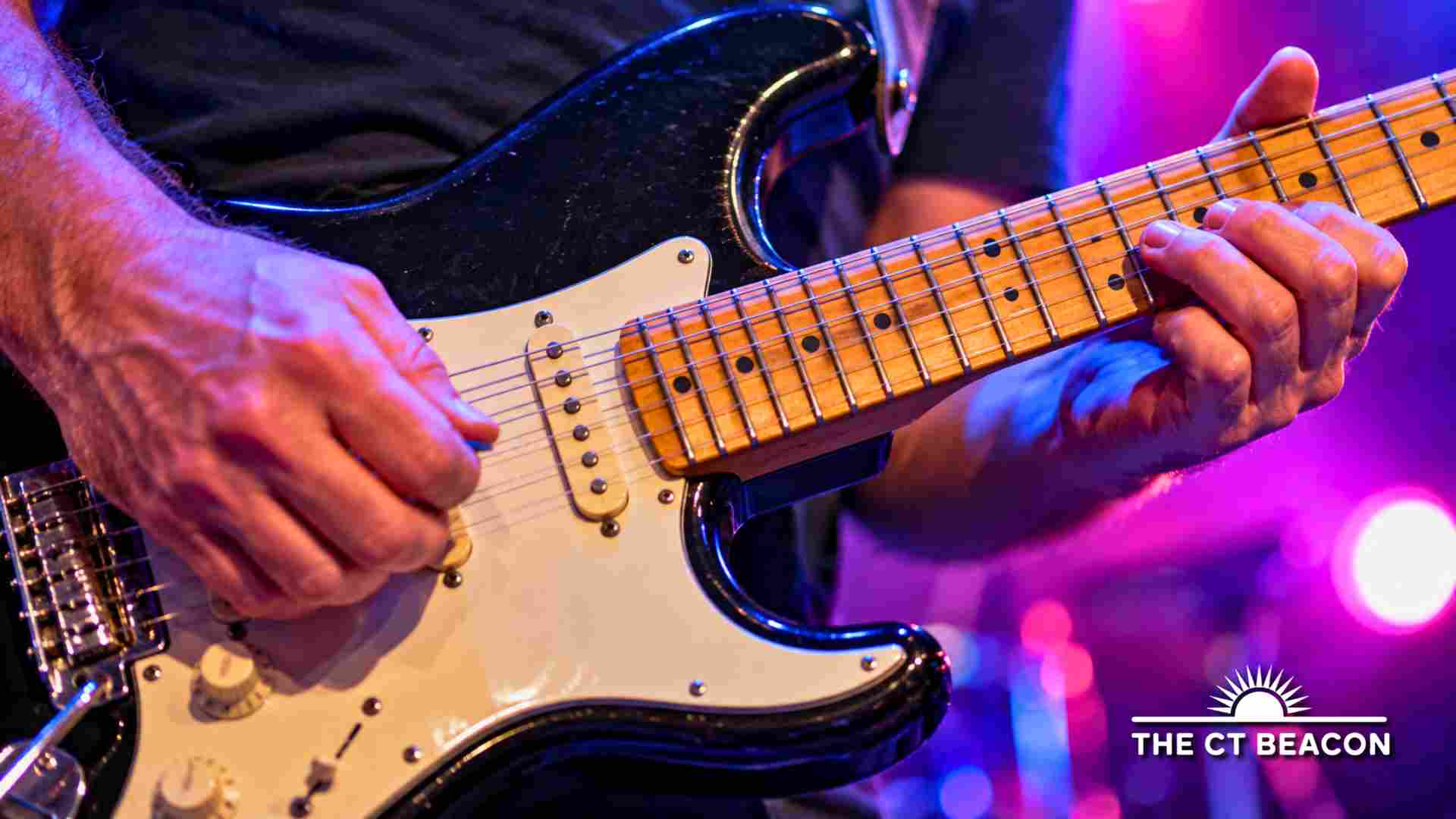
Featured image is an artistic representation inspired by the event and may not depict the actual people, location, or activities shown.