


Puzzle Palooza Turns a 500-Piece Jigsaw Into a Race at Groton’s Thrive55+
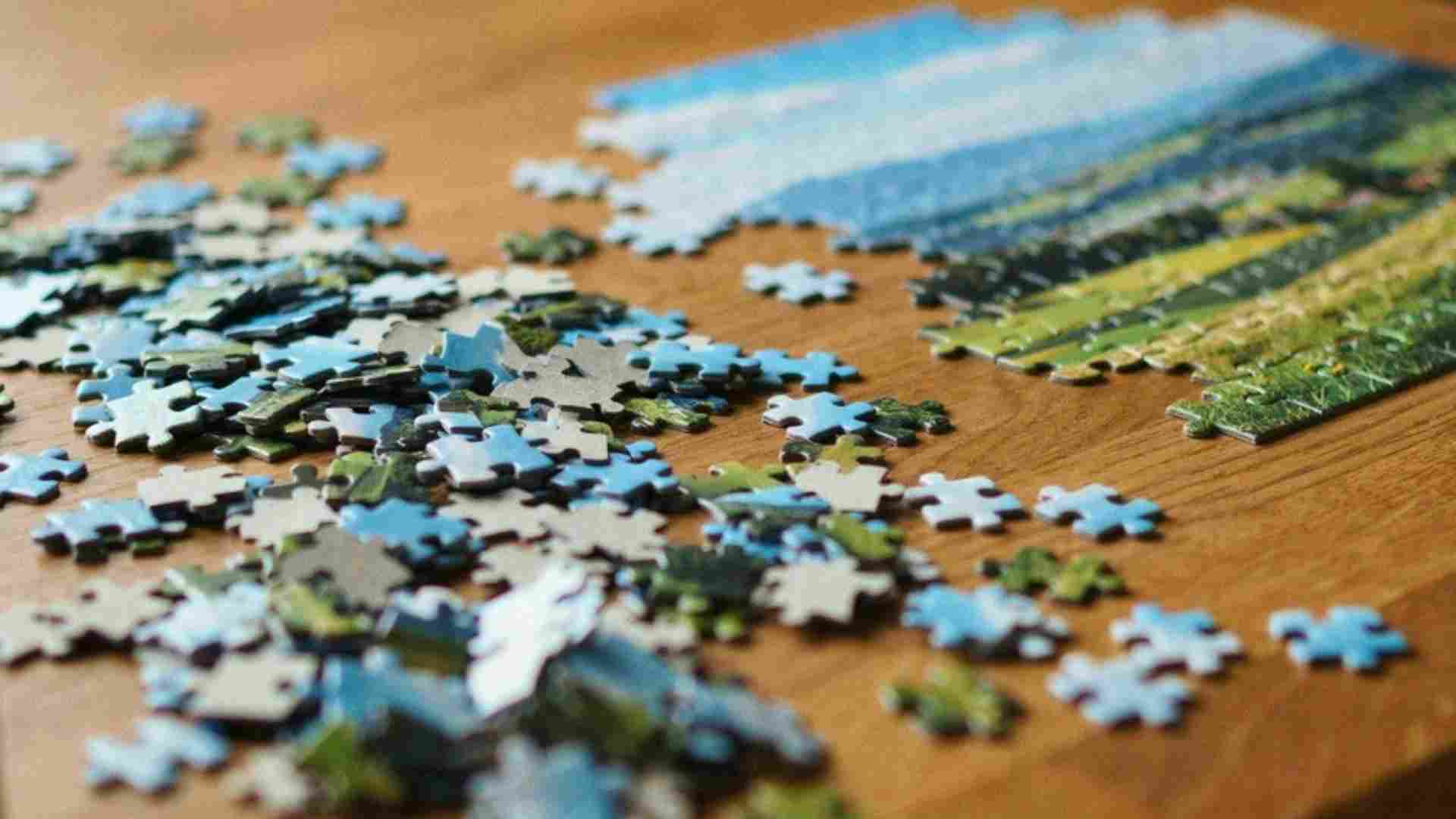
Puzzle Palooza turns a normally quiet night at the puzzle table into a race on Friday, September 18, as teams of up to four people compete to finish a 500-piece jigsaw puzzle first at Groton’s Thrive55+ Active Living Center.
Groton Parks & Recreation and Thrive55+ are hosting the family-friendly competition from 6 to 8 p.m. at 102 Newtown Road.
Teams can include one to four players; participants must be at least 8 years old, and registration costs $25 per team, not per person.
And don’t spend too much time planning what you’ll do with the prize money.
The winning team’s official prize is “Bragging Rights” until the next event.
Four People, 500 Pieces and a Clock
Most jigsaw puzzles are supposed to be relaxing.
Puzzle Palooza removes that part.
Each team faces the same basic challenge: complete a 500-piece puzzle faster than everyone else in the room.
Teams can have as many as four players, but going solo is allowed, too.
That creates an interesting choice.
Four people give a team eight hands and four sets of eyes.
They also give you four people simultaneously reaching into the same pile, searching for the same edge piece and confidently insisting that the blue section belongs in completely different parts of the puzzle.
For competitive puzzlers, teamwork matters almost as much as speed.
There Really Is Such a Thing as Competitive Jigsaw Puzzling
If the idea of racing someone to finish a jigsaw sounds like somebody invented a sport at the kitchen table, that’s not far from the truth.
But competitive puzzling has developed into an organized activity with serious competitors and formal tournaments.
At major competitions, puzzlers race against a clock individually, in pairs or as teams. Everyone in a division receives the same previously unseen puzzle, and the first competitor or team to assemble it correctly wins.
That means there are no advantages from already knowing the image.
Once the box opens, everyone starts solving.
Puzzle Palooza brings that concept down to a friendly community scale.
No national championship is at stake.
Your reputation among friends and family might be.
The Border-First Strategy Isn’t Mandatory
Anyone who has assembled enough jigsaw puzzles probably has a system.
Dump out the pieces.
Flip everything face-up.
Find the four corners.
Separate the edges.
Build the border.
Then attack the most recognizable colors and objects.
That’s a perfectly reasonable way to solve a puzzle.
It isn’t necessarily how the fastest competitive puzzlers do it.
Speed puzzling rewards minimizing wasted movement and identifying useful patterns quickly. Experienced competitors may sort pieces by distinctive colors, textures or shapes and work several recognizable sections simultaneously rather than insisting on completing the entire frame first.
A team introduces another variable: division of labor.
One person can hunt edges.
Another can attack an obvious object.
Someone else can sort pieces by color.
The fourth can spend 20 minutes looking for the piece that has been sitting directly in front of them.
Every team needs a specialist.
One Registration Covers the Whole Team
The $25 registration fee applies to the entire team.
Only one person needs to register.
That makes the cost:
$25 for one player
$12.50 each for two players
About $8.33 each for three players
$6.25 each for four players
The organizers describe spaces as limited, so teams need to register in advance rather than simply arriving Friday night and hoping a puzzle is available.
Registration is being handled through Groton Parks & Recreation’s MyRec system.
Kids Can Compete With Adults
Puzzle Palooza is open to ages 8 and older.
There are no separate adult and children’s competitions advertised for the September event, which creates the possibility of parents and children playing together or going head-to-head.
That’s part of what makes the format unusually accessible.
Nobody needs to run faster.
Nobody needs to be taller.
Nobody needs expensive equipment.
And a child who’s particularly good at recognizing patterns may be exactly the teammate an adult needs.
The organizers specifically describe Puzzle Palooza as an event for family and friends, rather than programming exclusively for older adults despite its location at Thrive55+.
Yes, Thrive55+ Is Hosting an 8+ Event
The location can initially seem confusing.
Thrive55+ Active Living Center is Groton’s municipal center for older adults and is powered by the Groton Senior Center.
But the facility also serves as a community gathering place and regularly hosts programming that reaches beyond its core 55-and-older audience.
Puzzle Palooza is explicitly an ages 8+ community event.
The competition is being presented jointly by Groton Parks & Recreation and Thrive55+, making it an opportunity for multiple generations to use the same community space.
Grandparents can bring grandchildren.
Parents can bring kids.
Friends can form a team.
Or one extremely confident puzzler can enter alone and attempt to embarrass all of them.
This Isn’t Groton’s First Puzzle Palooza
Groton has been building Puzzle Palooza into a recurring event rather than treating September’s competition as a one-off experiment.
The Town’s recreation materials included Puzzle Palooza among its community events in 2025, and another competition was held at Thrive55+ in November 2025.
A previous edition used the same basic formula: teams of one to four, a $25 team registration and light refreshments before the competition.
That helps explain this year’s most unusual prize.
The winners get bragging rights “until the next event.”
There actually is a next event.
Eventually somebody else gets a chance to take the title.
Refreshments Come Before the Serious Business
Light refreshments will be served before the competition begins.
That’s a useful distinction.
Once the clock starts, stopping to contemplate a snack while another team completes the upper-left corner probably isn’t an ideal strategy.
The pre-competition period also gives teams time to arrive, settle in and presumably engage in a little harmless psychological warfare.
Then it’s puzzle time.
The current event listing doesn’t specify the exact refreshments, so anyone with dietary restrictions shouldn’t assume particular food or beverages will be available.
There Are Actual Benefits to Doing Jigsaw Puzzles
Even without a trophy at the end, puzzles demand an interesting combination of skills.
You’re constantly comparing shapes, colors, patterns and spatial relationships.
A piece that looked useless 10 minutes ago suddenly becomes obvious after another section is completed.
Large puzzles also force the brain to move between two different scales: the tiny information contained on an individual piece and the larger image you’re trying to construct.
Doing that with teammates adds communication and cooperation.
Someone has to decide whether the dark-blue pieces belong to the sky, the water or that suspiciously blue building on the box.
And unlike plenty of activities that divide generations, a jigsaw puzzle needs virtually no explanation.
Most people already understand what they’re supposed to do.
Don’t Underestimate the 500-Piece Puzzle
Five hundred pieces sits in an interesting middle ground.
It’s manageable enough to make a two-hour competition realistic, particularly for a team.
It’s also large enough to punish bad organization.
A 500-piece puzzle doesn’t mean making 500 independent decisions.
Every correctly placed piece reduces the possibilities for the pieces around it. The puzzle gets easier as recognizable sections emerge and the number of unused pieces shrinks.
The hard part is getting there quickly.
At the beginning, you’ve got hundreds of pieces that all seem convinced they’re part of the same cloud.
That’s where good teams can separate themselves.
You Might Want to Choose Your Teammates Carefully
A four-person team sounds automatically better than a two-person team.
Not necessarily.
The ideal team needs people who can work simultaneously without repeatedly undoing one another’s organization.
A little strategy before the timer begins won’t hurt.
Decide who’s sorting.
Decide who’s looking for edges.
Divide obvious sections of the image if that’s useful.
And establish one important rule:
If somebody says, “I swear this piece goes here,” and it clearly doesn’t, they’re allowed two attempts before the piece goes back into circulation.
Friendships have limits.
The Only Trophy Is Being Able to Remind Everyone You Won
There is something refreshing about Puzzle Palooza’s prize structure.
No cash.
No giant trophy.
No championship belt.
Just bragging rights.
That puts the emphasis where a community puzzle competition probably belongs: having a good time and being just competitive enough to care who wins.
Of course, “bragging rights” can be an extremely valuable prize depending on the family.
If you’re going to spend $25 and two hours earning the right to remind your siblings that they lost a jigsaw puzzle to you, you might as well get your money’s worth.
The title lasts until the next Puzzle Palooza.
Use it responsibly.
Details
Event: Puzzle Palooza: Jigsaw Puzzle Competition
Date: Friday, September 18, 2026
Time: 6–8 p.m.
Location: Thrive55+ Active Living Center
Address: 102 Newtown Road, Groton, CT 06340
Organizers: Groton Parks & Recreation and Thrive55+ Active Living Center
Challenge: 500-piece jigsaw puzzle competition
Team Size: 1–4 players
Age: 8+
Cost: $25 per team
Registration: Required; only one member of each team needs to register
Refreshments: Light refreshments provided before the competition
Prize: Bragging rights until the next event
Contact: Groton Parks & Recreation, 860-536-5680
Registration Site: Groton Parks & Recreation MyRec
Availability: Space is limited; advance registration is recommended.
To register your team, click the Event Registration link below.
Featured image is an artistic representation inspired by the event and may not depict the actual people, location, or activities shown.