


Napatree Point Conservation Area Cleanup Brings Volunteers Together to Protect One of Rhode Island’s Best Beaches
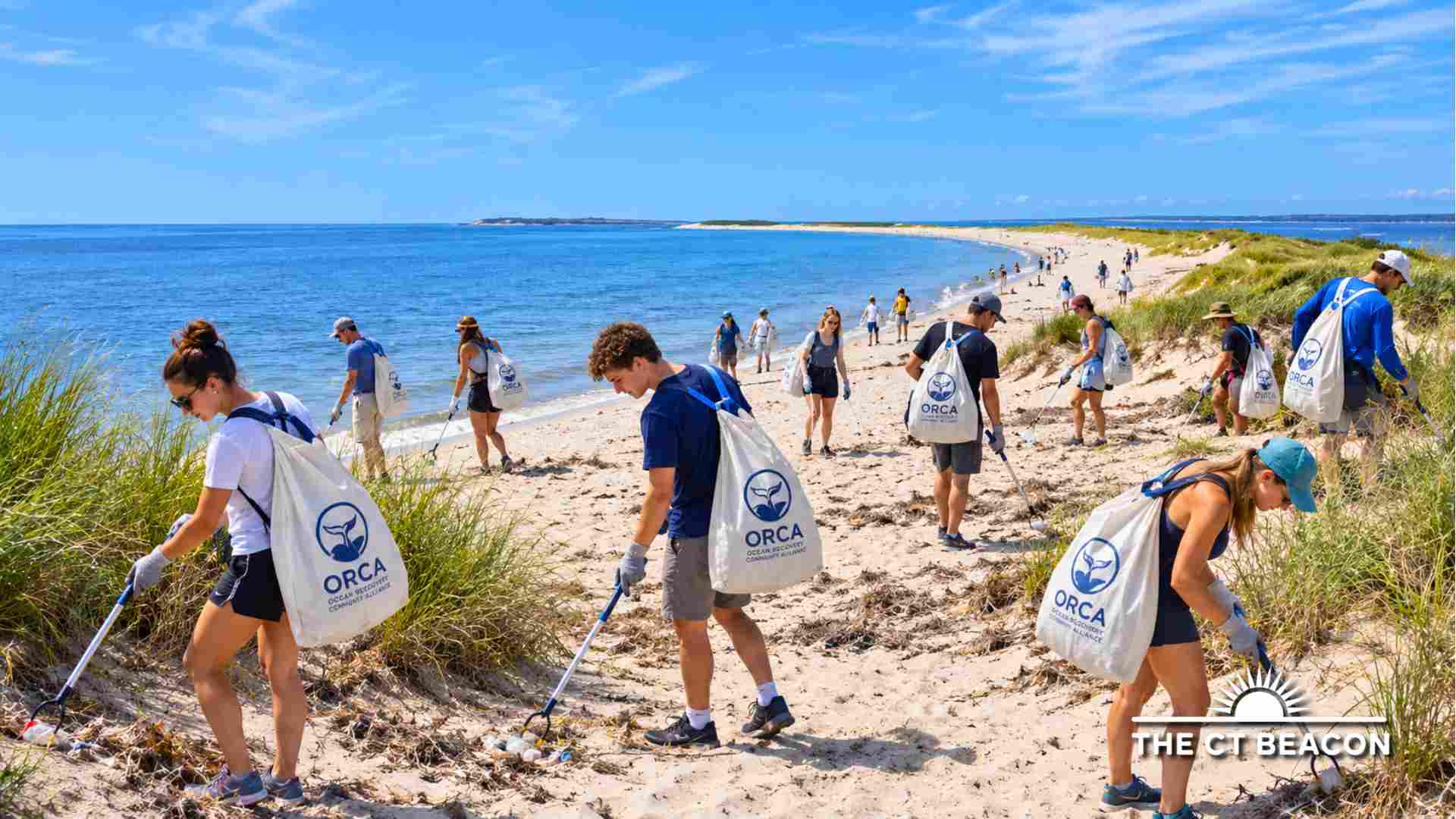
Napatree Point Conservation Area Cleanup brings volunteers to Watch Hill on Sunday, September 20, for two hours of hands-on work removing trash and marine debris from one of the most environmentally important stretches of shoreline in southwestern Rhode Island.
The cleanup runs from 10 a.m. to noon and is organized by the Ocean Recovery Community Alliance (ORCA) in partnership with the Watch Hill Conservancy.
Participants don’t need to arrive with cleanup equipment. Organizers say all cleanup supplies will be provided.
What volunteers do need is a willingness to walk the sand, look carefully at what has washed ashore or been left behind, and carry it back out.
At Napatree, that seemingly simple job matters.
Napatree Is Much More Than a Beach
Walk west from Watch Hill Village and the commercial shoreline quickly disappears.
Napatree Point stretches into the water between Block Island Sound and Little Narragansett Bay, creating a long barrier spit of beach, dunes, maritime vegetation, tidal areas and wildlife habitat.
There are no beachfront restaurants.
No boardwalk.
No vehicles.
No lifeguard towers.
There aren’t even restrooms.
The area is managed as an ecological preserve and wildlife refuge by the Watch Hill Fire District and the Watch Hill Conservancy.
That makes Napatree unusual along a heavily developed stretch of the New England coast.
It also makes keeping trash out of the landscape particularly important.
Trash on a Beach Doesn’t Necessarily Stay on the Beach
A plastic bottle or piece of fishing line lying in the wrack may look like litter waiting for someone to pick it up.
Ecologically, the problem is more complicated.
Wind and tides can move debris repeatedly between land and water. Plastics can break into progressively smaller pieces. Fishing line and other materials can entangle wildlife.
A Rhode Island Natural History Survey ecological assessment of Napatree specifically identified trash as a management concern.
Researchers noted debris accumulating in the wrack line and around dune vegetation and warned that shorebirds can ingest pieces of plastic and other material or inadvertently feed it to their young.
The report specifically recommended regular beach cleanups as a way to reduce accumulated debris, protect wildlife and preserve Napatree’s scenic character.
Sunday’s volunteers are effectively carrying out that recommendation one piece at a time.
ORCA Has Removed More Than 63,000 Pounds of Trash
The organization leading Sunday’s effort has been doing this on a much larger scale.
The Ocean Recovery Community Alliance was launched in 2020 as a service project of the Connecticut Community for Addiction Recovery.
Its mission is straightforward: organize people to remove debris from coastlines while building a larger community around environmental stewardship.
ORCA reports that it has now completed 240 cleanups, engaged more than 3,000 volunteers and removed 63,093 pounds of trash.
That’s more than 31 tons.
Its work extends across Rhode Island and Connecticut, with volunteers cleaning beaches and other coastal areas from community shorelines rather than waiting for somebody else to solve the problem.
Napatree is the organization’s September 20 stop.
The Watch Hill Conservancy Knows This Beach Foot by Foot
ORCA is working alongside an organization with a particularly intimate relationship with the location.
The Watch Hill Conservancy has spent years protecting Napatree and educating visitors about its natural systems.
Its work includes ecological monitoring, wildlife protection, naturalist programs, research and public education.
Throughout the warmer months, Conservancy naturalists lead programs devoted to birds, marine life, plants, tidal pools, horseshoe crabs, insects and the larger coastal ecosystem.
That makes a cleanup another form of conservation education.
Spend two hours deliberately looking for things that don’t belong on a beach and you begin noticing the beach itself differently.
This Is Important Habitat for Shorebirds
Napatree’s undeveloped shoreline makes it valuable to wildlife, particularly birds.
Protected nesting areas can appear along the beach during the breeding season, and visitors are prohibited from entering areas roped off for nesting birds.
Species associated with Napatree include piping plovers, least terns, American oystercatchers and osprey.
Some live or breed here.
Others use the coastline during migration.
And September is very much migration season.
For birds traveling along the Atlantic coast, relatively undeveloped places where they can stop, feed and rest become important pieces of a much larger geographic puzzle.
The plastic bag that blows across a parking lot somewhere else doesn’t understand any of that.
If it eventually reaches the ocean, it goes wherever currents and wind take it.
Sometimes that’s Napatree.
The Beach Itself Is Always Moving
Napatree may look permanent when you’re standing on it.
It isn’t.
Barrier beaches are dynamic landscapes shaped continuously by waves, tides, wind and storms.
Sand migrates.
Dunes build and erode.
Inlets change.
Vegetation advances and retreats.
Napatree’s history contains an especially dramatic demonstration of what the ocean can do.
Before the Great New England Hurricane of 1938, Napatree wasn’t the undeveloped landscape visitors know today. Summer cottages stood along the point.
The hurricane devastated the area.
Homes were destroyed, lives were lost and the developed summer community on the point disappeared.
Napatree was never rebuilt in the same way.
The result, generations later, is the rare stretch of relatively wild shoreline volunteers will be cleaning Sunday morning.
There’s Even a Fort Hiding at the End
People willing to walk far enough eventually reach another layer of Napatree history.
Remnants of Fort Mansfield survive near the western end of the point.
The coastal-defense installation was established around the turn of the 20th century as part of the network built to protect important American harbors.
Its active military life proved relatively short.
Today its surviving concrete structures sit within a landscape that has largely reclaimed them.
It makes for a peculiar progression during a long walk.
Watch Hill Village falls behind.
The crowds thin.
The beach continues.
Then pieces of an abandoned military installation begin appearing among the vegetation.
Sunday’s cleanup isn’t specifically a historical tour, but Napatree has a way of making natural and human history difficult to separate.
Volunteers Should Expect to Walk
This is worth knowing before arriving.
Napatree doesn’t have a parking lot sitting beside the beach.
Access is on foot from Watch Hill Village, and cleanup participants should be prepared for walking on sand while carrying collected material.
The Conservation Area itself has no restroom facilities.
There are also no vehicles or bicycles permitted on Napatree.
Parking is available in Watch Hill Village, but the Conservancy cautions that Napatree has no dedicated visitor parking. Spaces in the village can be limited, so arriving with enough time to park and walk to the meeting area is a sensible plan.
The event flyer identifies the location as Fort Road, Westerly.
The Conservancy lists Napatree Point Conservation Area at the same location.
Don’t Wander Across the Dunes Looking for Trash
A beach cleanup doesn’t override the rules protecting the beach.
Visitors should use the established access routes marked by yellow poles and should not cross dunes outside approved paths.
Any wildlife-protection areas that are roped or posted remain off limits.
Vehicles, bicycles and drones are prohibited.
The principle is simple.
The goal is to remove human impacts, not create new ones while searching for old ones.
September Changes the Rules for Dogs
Because the cleanup occurs after Labor Day, registered dogs are permitted on Napatree throughout the day.
They still must remain leashed at all times, and owners must remove their waste from the beach.
Dogs, like people, cannot enter areas closed for wildlife protection.
Anyone thinking of bringing a dog should also consider whether a two-hour cleanup involving trash collection, other volunteers and potentially sharp or unpleasant debris is actually a good environment for that particular animal.
You Don’t Have to Solve Marine Pollution Sunday Morning
A cleanup can feel almost absurdly small compared with the scale of ocean pollution.
Two hours.
One beach.
A few bags of debris.
Then look at ORCA’s numbers.
More than 63,000 pounds removed.
That didn’t happen in one heroic environmental intervention.
It happened because people kept showing up.
One cleanup followed another.
One volunteer picked up one bottle, one piece of rope, one food wrapper or one fragment of plastic.
Then somebody did it again.
That’s the practical idea behind Sunday’s event.
Nobody has to save the Atlantic Ocean between 10 a.m. and noon.
Just leave Napatree cleaner than it was at 9:59.
Details
Event: Napatree Point Conservation Area Cleanup
Date: Sunday, September 20, 2026
Time: 10 a.m.–noon
Location: Napatree Point Conservation Area
Address: Fort Road, Westerly, RI 02891
Organizer: Ocean Recovery Community Alliance (ORCA)
Community Partner: The Watch Hill Conservancy
Cost: No participation fee is listed
Registration: Advance registration is available through ORCA
Supplies: All cleanup supplies will be provided
Parking: Napatree has no dedicated parking area; participants should use available parking in Watch Hill Village and walk to the Conservation Area
Restrooms: There are no restroom facilities within Napatree Point Conservation Area
Terrain: Beach and sand; participants should be prepared to walk
Dogs: Registered dogs are permitted after Labor Day but must remain leashed and outside any posted wildlife-protection areas
Conservation Rules: Stay on designated paths through the dunes and outside all roped or posted habitat areas
More information is available at the Event Website link below.
To register, click the Event Registration link below.
Featured image is an artistic representation inspired by the event and may not depict the actual people, location, or activities shown.