


- This event has passed.
Mushroom Foraging Workshop with The Mushroom Hunting Foundation at DPNC
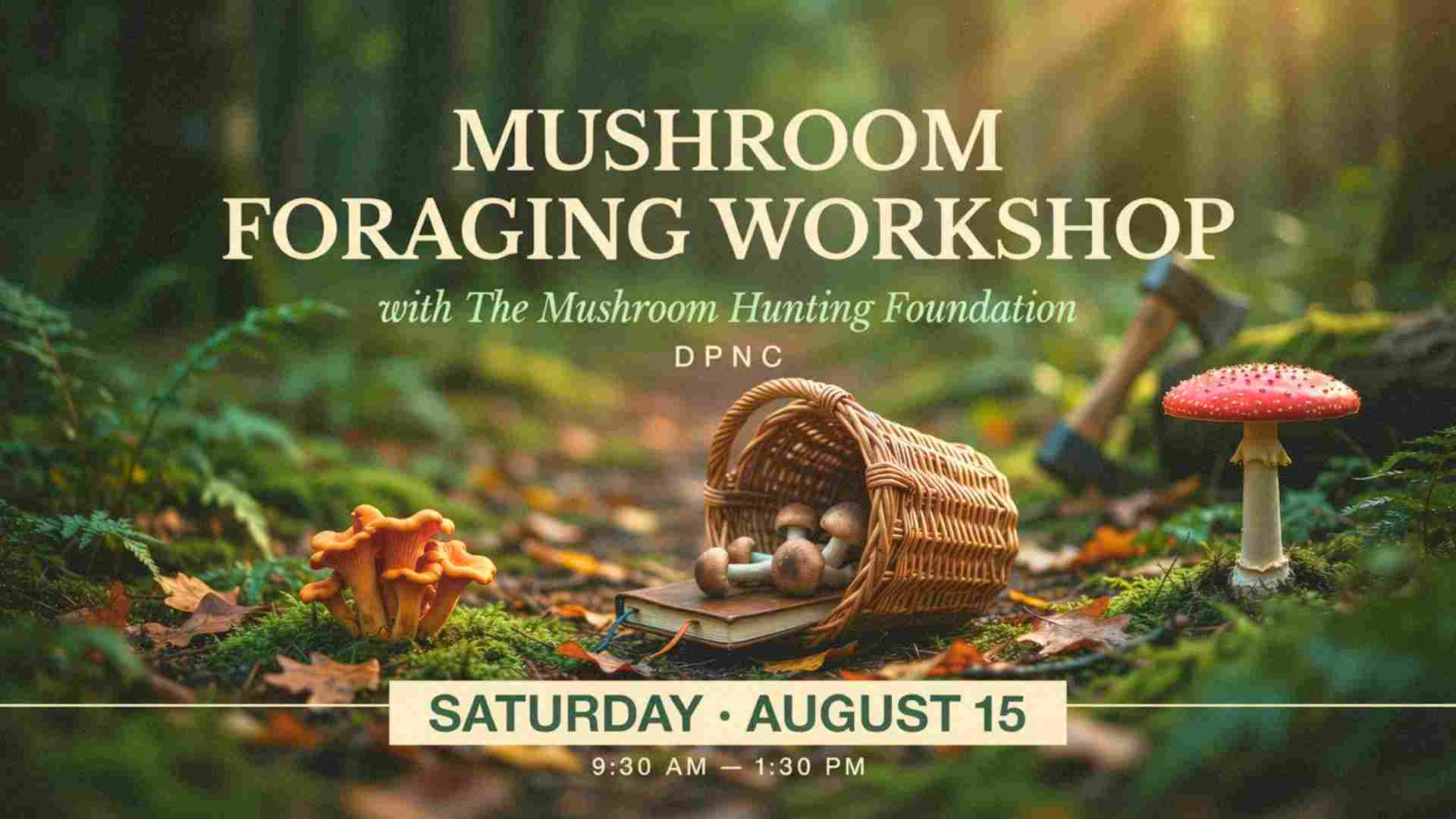
Mushroom Foraging Workshop with The Mushroom Hunting Foundation at DPNC takes participants from forest trail to frying pan during a four-hour hands-on class in Mystic on Saturday, August 15. The workshop begins with an introduction to wild mushrooms before heading into the woods with experienced foragers to search for edible species, then returns for a cooking demonstration showing how a successful morning’s discoveries can become dinner.
This isn’t simply a guided hike where somebody points at mushrooms along the trail. The $125 half-day workshop is designed to teach the process behind responsible mushroom foraging: how to look, what physical characteristics matter when identifying fungi, which mushrooms beginning foragers should avoid, and how edible wild mushrooms can be prepared in the kitchen.
The instructors come from The Mushroom Hunting Foundation, a Southern New England organization devoted to teaching safe mushroom and wild-plant foraging. Its programs combine classroom instruction, guided hunts and cooking demonstrations, an approach that fits naturally with the forests and trails surrounding the Denison Pequotsepos Nature Center. (Mushroom Hunting)
From Trail to Table
The workshop begins indoors with a brief slideshow preparing participants for what they’ll encounter outside.
That’s more important than it might sound. Mushroom identification depends on details that are easy for an inexperienced person to overlook. Color and overall shape are only part of the picture.
One example is what’s underneath the cap. Mushrooms that look remarkably similar from above can have gills, pores or tiny tooth-like structures underneath, placing them in entirely different groups. Learning to slow down and examine those characteristics is part of becoming a safer forager.
After the introduction, the class heads onto DPNC’s trails.
Rather than simply collecting whatever happens to appear, instructors will show participants how experienced mushroom hunters scan the woods, recognize promising habitats and examine specimens before attempting an identification.
What turns up will depend on what the forest produces that week. That’s the unpredictable part of foraging: there isn’t a produce aisle waiting at the end of the trail.
Meet The Mushroom Hunting Foundation
The Mushroom Hunting Foundation grew from the work of Rhode Island natives Ryan Bouchard and Emily Schmidt, who began mushroom hunting after taking a class with the Audubon Society of Rhode Island.
What started as a hobby became a much deeper study of mycology, wild foods and the ecological roles played by fungi. The pair eventually began sharing what they had learned through presentations, guided foraging walks and culinary demonstrations. (Mushroom Hunting)
Today, the Mushroom Hunting Foundation offers educational programs built around safely enjoying wild mushrooms and edible plants. Classes range from introductory programs to more intensive field experiences and private instruction.
The emphasis on safe identification matters.
Some mushroom groups contain both edible and dangerous species, and look-alikes can make casual identification risky. The Foundation encourages beginners to concentrate first on species with characteristics that make reliable identification easier rather than immediately attempting difficult mushrooms with potentially dangerous doubles. (Mushroom Hunting)
What Could You Find?
August can produce an interesting assortment of mushrooms in Southern New England, but there’s no predetermined shopping list.
Weather, rainfall, temperature and the condition of the forest all affect what’s fruiting on any particular day.
The Mushroom Hunting Foundation has documented regional species ranging from edible Green-Quilted Russulas to the unusual Apricot Jelly mushroom, a soft, gelatinous edible fungus that can absorb the flavors it’s cooked with.
Finding something, however, isn’t the same as deciding it’s dinner.
One of the most useful lessons in a workshop like this is learning when not to eat a mushroom. Identification should be based on multiple characteristics and reliable knowledge rather than comparing something found in the woods with a photograph.
Into the Kitchen
The final portion of the workshop moves from identification to preparation.
Participants will watch a cooking demonstration focused on turning safely identified wild mushrooms into food. The Mushroom Hunting Foundation incorporates culinary instruction into its programs because understanding a mushroom doesn’t end when it’s identified. Different species can have very different flavors and textures and may require different preparation techniques.
That’s what gives this particular workshop its “trail to table” character.
You begin by learning what you’re looking for, search for it in the forest and finish by seeing what can happen in the kitchen.
A Good Place to Learn Foraging
The Denison Pequotsepos Nature Center provides a fitting outdoor classroom.
The Nature Center is located at 109 Pequotsepos Road in Mystic and maintains a network of trails through southeastern Connecticut woodland and wetland habitats. DPNC regularly uses those natural areas for environmental education, guided walks and foraging programs.
Mushroom education isn’t new here, either. DPNC has previously hosted Mushroom Hunting Foundation programs, including a Mushroom Foraging Intensive in August 2025.
The Nature Center itself is open Saturdays from 9 a.m. to 4 p.m., so the workshop begins shortly after the facility opens.
What to Wear and Bring
Participants should dress for several hours split between indoor instruction and hiking through the woods.
Wear sturdy, closed-toe walking or hiking shoes and clothing appropriate for the weather. Long pants can be useful when moving through wooded areas, and insect repellent is worth considering in August.
Because the workshop involves mushroom hunting rather than staying exclusively on a maintained walking path, expect uneven natural terrain and some time spent stopping, bending down and closely examining the forest floor.
Weather conditions can also change what the group encounters, so check the forecast before leaving home.
Who Should Attend?
The workshop is best suited to adults and older participants interested in learning mushroom foraging as a skill rather than simply taking a nature walk.
No previous mushroom-hunting experience is listed as a requirement. Beginners can learn the fundamentals of observation and identification, while people who have already started exploring wild mushrooms can benefit from working directly with experienced instructors in the field.
The four-hour format allows considerably more time for instruction than a typical guided mushroom walk.
Event Details
Date
Saturday, August 15, 2026
Time
9:30 a.m. – 1:30 p.m.
Location
Denison Pequotsepos Nature Center
Address
109 Pequotsepos Road
Mystic, CT 06355
Admission
$125
Duration
Approximately four hours
Instructors
The Mushroom Hunting Foundation
Program Includes
Introductory slideshow, guided mushroom-foraging hike and cooking demonstration.
Experience Level
No previous mushroom-foraging experience is listed as required.
What to Wear
Sturdy closed-toe walking or hiking shoes and clothing appropriate for several hours outdoors. Long pants and insect repellent are recommended for woodland conditions.
Important Note
Never consume a wild mushroom based solely on an identification made from a photograph, app or casual comparison. The workshop teaches identification techniques under the guidance of experienced foragers.
More Information
For ticket purchases, click on the Ticketing link below.