


- This event has passed.
Mark Joseph Stelzner discusses Growth Machines
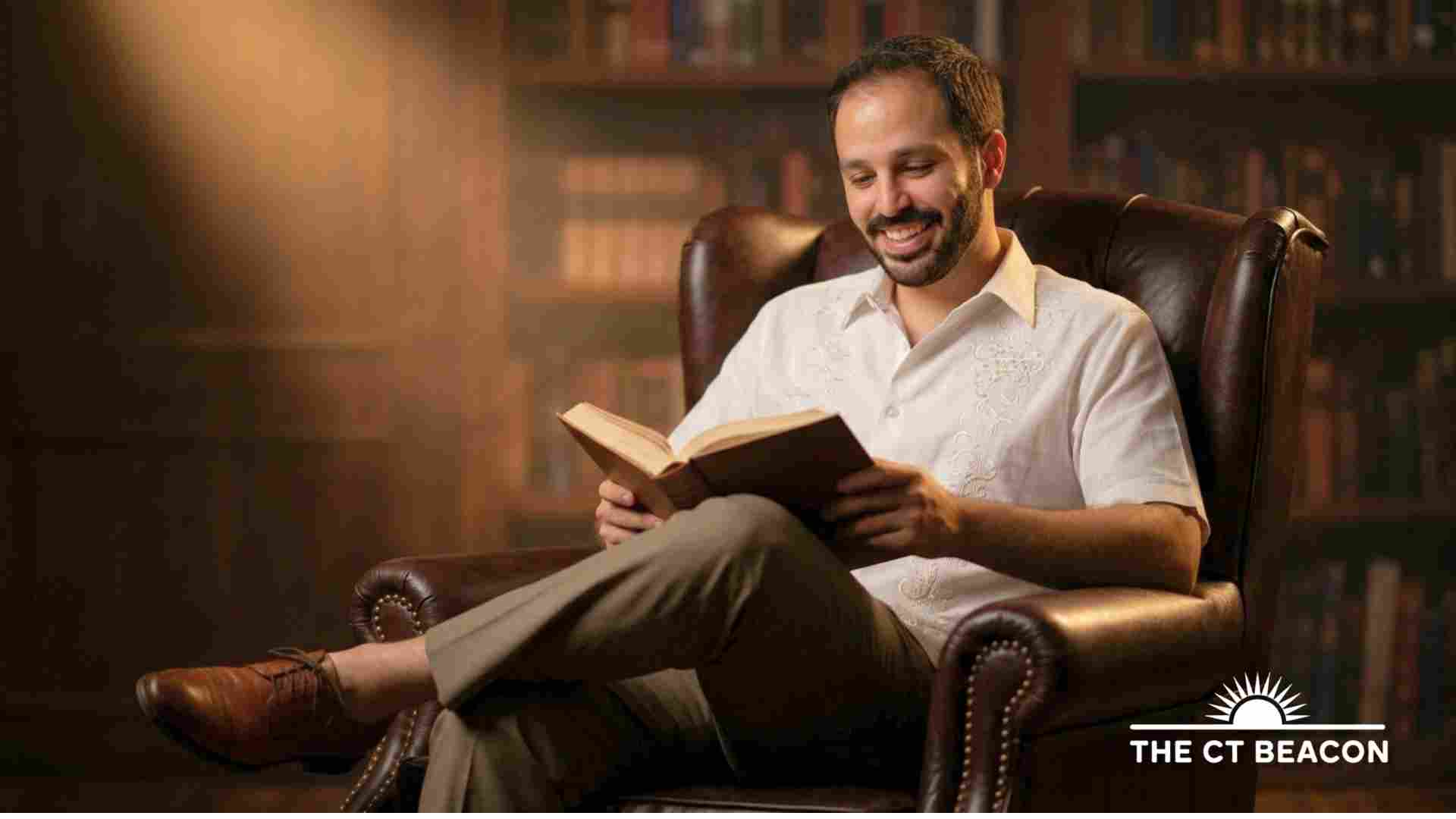
Mark Joseph Stelzner discusses Growth Machines at Bank Square Books in Mystic on Friday, August 21, just three days after the book’s publication.
The free author talk and signing begins at 6 p.m. Stelzner, an associate professor of economics at Connecticut College, uses his new book to tackle a question almost everyone has experienced in one form or another: Why do we keep buying things we don’t really need, even when getting more stuff doesn’t seem to make us happier?
His answer goes considerably beyond blaming advertising, credit cards or a lack of self-control. Growth Machines argues that America’s economic system depends upon continually expanding consumption and has gradually helped condition people to find satisfaction in the act of consuming itself.
Why Do We Keep Buying?
Think about the unopened books on a shelf. Clothes bought and barely worn. The perfectly functional phone replaced because a newer one appeared.
Stelzner argues that conventional economics doesn’t adequately explain behavior like this.
People obviously work and spend money to meet genuine needs such as food and housing. But Growth Machines examines what happens after those needs have been satisfied.
According to Stelzner, consumption can become rewarding in itself. Buying something provides a temporary emotional payoff, even when the object being purchased adds little lasting happiness to our lives.
The book then asks a larger question: What if that behavior isn’t merely an individual quirk?
What if the economy needs it?
An Economy That Needs More
At the center of Growth Machines is Stelzner’s examination of what he calls “growthism,” the assumption that an economy should continually become larger.
If economic growth depends heavily on consumer spending, people can’t simply reach a comfortable level of material life and collectively decide they have enough. Businesses need customers to keep purchasing. New desires must emerge. Existing products must be replaced.
Stelzner traces how those economic pressures interact with human psychology, status and social expectations.
Across 12 chapters, he examines conspicuous consumption, irrational economic behavior, manipulation, the potentially addictive qualities of consumption, environmental consequences and the relationship between consumers and workers.
The final portion of the book turns toward another question: if endless consumption isn’t producing greater happiness, what would an economy built around a different definition of prosperity look like?
A New Book with a Local Connection
The Mystic appearance comes almost immediately after the book’s release.
The University of Chicago Press published the 296-page Growth Machines on August 18, 2026, making Friday’s Bank Square Books program one of the first opportunities for local readers to hear Stelzner discuss the finished book.
The subject also grows naturally from his academic work.
Stelzner joined Connecticut College in 2015 and is now an associate professor in the college’s Economics Department. His primary research has examined inequality and the political foundations of the economic system.
His work has explored labor laws and inequality, antitrust policy, wage discrimination, private health care costs, technological change, slavery and capitalism, and the economic history of the United States.
More recently, that research expanded into the relationship between economic growth, consumption and happiness.
In 2022, he published research examining what economists call the Easterlin Paradox, the observation that rising income and economic growth don’t necessarily produce corresponding long-term increases in happiness.
Growth Machines takes that problem beyond the academic journal and places consumption itself at the center of the discussion.
From Inequality to the Shopping Cart
Stelzner’s background makes his approach to consumer behavior somewhat different from a traditional personal-finance critique.
He’s not primarily asking whether someone should have bought the $6 coffee or upgraded a television.
His research looks at the systems surrounding those decisions.
Previous work has examined how changes in labor law contributed to inequality during the Gilded Age, how employers can exercise wage-setting power over workers and how political and institutional structures influence economic outcomes.
With Growth Machines, the consumer becomes part of that larger economic structure.
We work to consume. Businesses depend on that consumption. Growth requires additional spending. Additional spending requires new wants. And satisfying those wants sends us back around the cycle.
The uncomfortable part of Stelzner’s argument is that people can participate willingly because buying something can genuinely feel good, at least temporarily.
The Book Is Already Drawing Attention
Although Growth Machines has only just been released, it has attracted praise from several prominent scholars and writers examining capitalism, inequality and economic growth.
Economist Thomas Piketty, whose work has focused extensively on wealth and inequality, described the book as a must-read examination of conspicuous consumption and the rise of growthism.
Harvard historian Sven Beckert praised Stelzner’s exploration of how increasing consumption became connected to ideas about well-being and economic thought.
Other early responses have focused on the book’s examination of the environmental consequences of an economy structured around continual expansion.
That gives Friday’s discussion several possible directions. Growth Machines isn’t simply about shopping habits. It touches economics, psychology, labor, inequality, environmental sustainability and a surprisingly personal question:
How much of what we want did we actually decide to want?
About Mark Joseph Stelzner
Mark Joseph Stelzner is an associate professor of economics at Connecticut College in New London.
He earned his bachelor’s degree from Boston University, a master’s degree from the University of Denver’s Josef Korbel School of International Studies and his doctorate from the University of Massachusetts.
His academic research specializes in inequality and the political underpinnings of economic systems.
Stelzner’s scholarship has appeared in publications including the Cambridge Journal of Economics, The Review of Black Political Economy, Journal of Happiness Studies, Economic History Review and Labor History. His work has also received attention from publications and organizations including The Economist, The Nation, the Washington Center for Equitable Growth and the Center for American Progress.
Growth Machines is published by the University of Chicago Press.
Event Details
Event: Mark Joseph Stelzner: Growth Machines Author Talk and Signing
Date: Friday, August 21, 2026
Time: 6–7 p.m.
Admission: Free
Author: Mark Joseph Stelzner
Book: Growth Machines: On the Hollow Joys of Consumption in the Desert of Economic Life
Publisher: University of Chicago Press
Publication Date: August 18, 2026
The program includes a discussion of Growth Machines followed by a book signing with Stelzner.
More information is available at the Event Website link below.
Featured image is an artistic representation inspired by the event and may not depict the actual people, location, or activities shown.