

Deaf Awareness Day at Mystic Aquarium
Deaf Awareness Day at Mystic Aquarium brings the Deaf, hard of hearing, and hearing communities together Sunday, September 13, for a day of animals, American Sign Language and connection at one of southeastern Connecticut’s most popular attractions.
The special event runs from 10 a.m. to 3 p.m. and is being promoted by both Mystic Aquarium and the American School for the Deaf. Rather than separating Deaf Awareness Day from a regular aquarium visit, the event takes place amid the beluga whales, sea lions, penguins, sharks and other animals that make up the Mystic Aquarium experience.
It’s also an opportunity for hearing visitors and people learning ASL to spend time in an environment where signing and Deaf culture are visible parts of the day.
A Day Built Around the Deaf Community
Deaf Awareness Day isn’t simply about providing access to an otherwise hearing-centered event.
The larger purpose is community.
The American School for the Deaf’s ASL Department describes its community events as opportunities to use and learn American Sign Language, celebrate Deaf culture and identity, and connect Deaf and hard of hearing people, their families and the wider community.
That makes Mystic Aquarium a particularly family-friendly setting for the September gathering.
There’s no lecture hall to sit in all afternoon. Families can explore the aquarium, watch the animals, meet other members of the community and participate in the day’s activities at their own pace.
And visitors don’t need to be Deaf or fluent in ASL to appreciate why the event matters.
Deaf Awareness Day also gives hearing people an opportunity to encounter a culture and language that are frequently misunderstood.
ASL Is a Language, Not Signed English
One of the most important things to understand about American Sign Language is right there in its name.
It’s a language.
ASL isn’t English translated word by word into hand movements. It has its own grammar, syntax, vocabulary and linguistic structure, with meaning communicated through handshapes and movement along with facial expressions and body position.
It also has a culture built around it.
The term Deaf, when capitalized, is commonly used when referring to cultural identity and membership in the signing Deaf community rather than simply describing a person’s level of hearing.
That distinction helps explain why events like Deaf Awareness Day aren’t framed solely around disability or accommodation.
They can also be celebrations of language, identity and community.
For hearing parents of Deaf or hard of hearing children, students studying ASL or anyone simply interested in learning more, an event where Deaf and hearing people naturally occupy the same space can do something a textbook can’t.
It makes the language visible as something people actually live in.
The American School for the Deaf Has Been Doing This Since 1817
There’s considerable history behind the organization promoting Sunday’s event.
The American School for the Deaf in West Hartford was founded in 1817 and is the oldest permanent school for Deaf students in the United States.
Its creation is tied to Thomas Hopkins Gallaudet, who traveled to Europe searching for methods of educating Deaf children. In England, he met French Deaf educator Laurent Clerc.
Clerc eventually returned to America with Gallaudet.
Together with physician Mason Fitch Cogswell and other supporters, they established what was originally called the Connecticut Asylum for the Education and Instruction of Deaf and Dumb Persons in Hartford.
Among the school’s first students was Cogswell’s daughter, Alice.
The school’s importance reaches far beyond Connecticut.
Clerc brought French Sign Language traditions to America, where they interacted with existing signing systems and communities. That history played an important role in the development of what became American Sign Language.
More than two centuries later, ASD continues serving Deaf and hard of hearing people from birth through adulthood through educational programs and services.
Its ASL Department also works beyond the classroom, supporting events where families, students and community members can practice ASL and participate in Deaf culture.
Deaf Awareness Day at Mystic Aquarium is one of those gatherings.
Belugas, Penguins, Sea Lions and Sharks
Of course, there’s another reason to go.
It’s still Mystic Aquarium.
The aquarium’s best-known residents are its beluga whales. Mystic is the only aquarium in New England where visitors can see belugas, making them one of the signature experiences on the property.
The campus also includes California sea lions, African penguins, sharks, rays and a collection of marine and terrestrial species from ecosystems around the world.
Some experiences are interactive.
The ray touch habitat gives visitors an opportunity to gently make contact with rays under staff guidance, while other exhibits explore the waters much closer to home, including the ecosystem of Long Island Sound.
The aquarium’s California sea lions have their own Marine Theater presentations, combining animal behavior with the training and husbandry work involved in caring for them.
There’s also the Marsh Trek, a short boardwalk through a freshwater wetland habitat where visitors may encounter native birds, turtles, frogs and other wildlife.
Families with younger children can break up the animal exhibits with the Seal Pup Playspace, designed for children ages 2 to 5.
Accessibility Goes Beyond One Special Sunday
While Deaf Awareness Day puts a particular focus on Deaf and hard of hearing visitors, Mystic Aquarium maintains accessibility services throughout the year.
The aquarium is wheelchair accessible, and a limited number of wheelchairs are available on a first-come, first-served basis.
Mystic Aquarium is also a KultureCity Sensory Inclusive venue. Sensory bags can be borrowed by guests who may benefit from them, and the aquarium identifies quiet areas and headphone zones around the property.
A Yale New Haven Health Family Lounge and First Aid Center provides another quieter space on the campus.
Those services matter because accessibility isn’t one thing.
A visitor who is Deaf may have completely different needs from someone who is autistic, has limited mobility, is DeafBlind or experiences sensory overload. Building a genuinely accessible attraction means recognizing those differences rather than treating “accessible” as a single checkbox.
Deaf Awareness Day adds another layer by putting communication, language and Deaf culture at the center of the experience for a day.
Deaf Awareness in the Middle of September
The timing also carries some significance.
September is widely recognized as Deaf Awareness Month, with organizations, schools and Deaf communities using the month to increase understanding of Deaf culture, sign languages, accessibility and the experiences of Deaf and hard of hearing people.
The goal isn’t simply to teach hearing people a few signs.
Awareness can mean understanding why captions matter, recognizing ASL as a complete language, learning appropriate ways to communicate with Deaf and hard of hearing people and understanding that Deaf people don’t all communicate in the same way.
Some use ASL as their primary language. Others use spoken language, lipreading, hearing aids or cochlear implants. Some use multiple methods depending on the situation.
There isn’t a single Deaf experience.
That’s another reason community events matter. They replace abstractions with people.
A Different Kind of Aquarium Day
Mystic Aquarium hosts plenty of special events during the year, from adults-only evenings to conservation programs and seasonal celebrations.
Deaf Awareness Day is different.
The aquarium itself is still the attraction. Families can come to see belugas, watch sea lions, explore the exhibits and spend a Sunday together.
But for five hours on September 13, there’s another community gathering inside that experience.
For Deaf and hard of hearing visitors, it’s an opportunity to spend the day in a space where their language and community are deliberately being recognized.
For hearing families, ASL students and anyone interested in Deaf culture, it’s an invitation to join them.
Details
Event: Deaf Awareness Day at Mystic Aquarium
Date: Sunday, September 13, 2026
Time: 10 a.m.–3 p.m.
Venue: Mystic Aquarium
Address: 55 Coogan Boulevard, Mystic, CT 06355
Presented/Promoted With: American School for the Deaf
Audience: Deaf, hard of hearing and hearing community members, families and ASL learners
Aquarium Hours: 9 a.m.–5 p.m.
Parking: Free on-site parking
Accessibility: Wheelchair accessible; sensory resources are also available
Phone: 860-572-5955
More information is available at the Event Website link below.
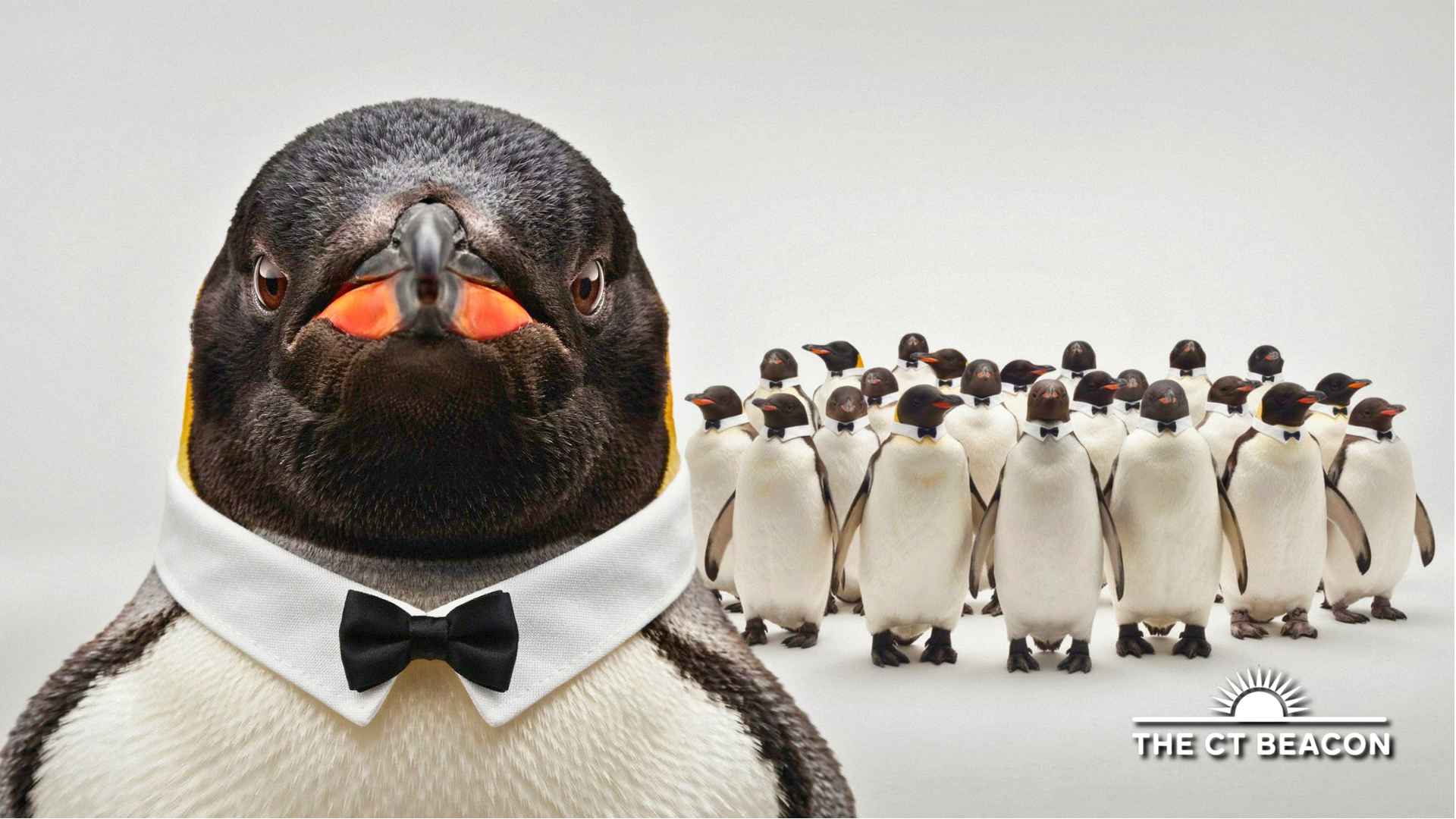
Featured image is an artistic representation inspired by the event and may not depict the actual people, location, or activities shown.