


- This event has passed.
Amphibians of CT at the Denison Pequotsepos Nature Center
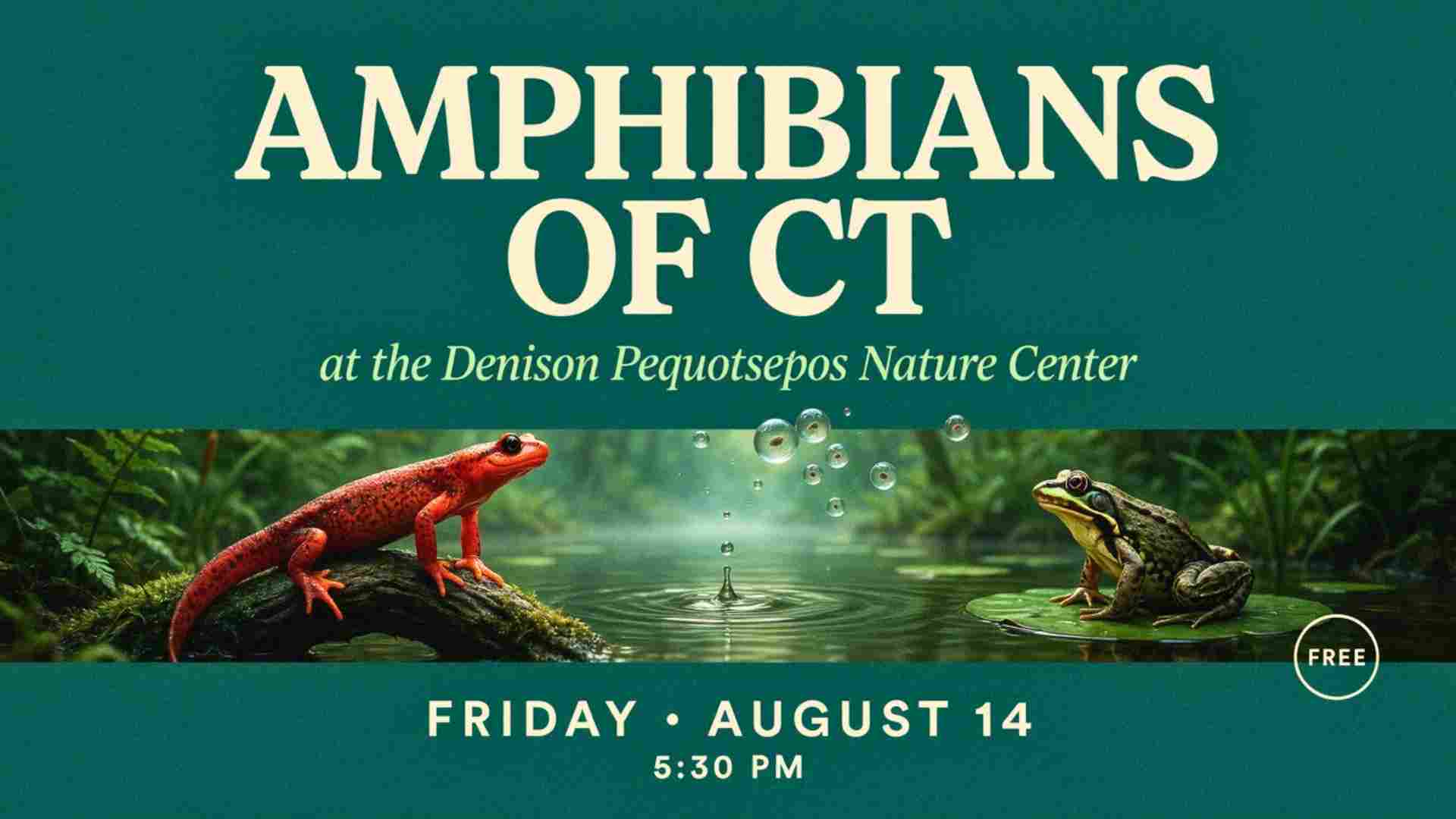
Amphibians of CT at the Denison Pequotsepos Nature Center takes families into the woods and wetlands of Mystic on Friday, August 14, for an evening search for frogs, toads and salamanders. The free 90-minute program begins at 5:30 p.m. and combines a guided outdoor exploration with an up-close introduction to some of the Nature Center’s resident amphibians.
Instead of learning about these animals entirely inside a classroom, participants will head to the vernal pools and surrounding woods to look for amphibians where they actually live. Nature Center educators will help visitors identify what they find and explain the adaptations that allow amphibians to live between aquatic and terrestrial environments.
It’s exactly the sort of hands-on program the Denison Pequotsepos Nature Center has been developing for generations. DPNC’s environmental education programs use the woodlands, wetlands and meadows surrounding the center as outdoor classrooms, while live animals and natural history exhibits give visitors a closer look at species they might otherwise walk past without noticing. (Denison Pequotsepos Nature Center)
Searching for Connecticut’s Amphibians
Connecticut’s forests, ponds and wetlands provide habitat for a surprisingly varied population of amphibians.
During the program, participants will search for frogs, toads and salamanders, paying particular attention to the Nature Center’s vernal pools.
Vernal pools are temporary woodland wetlands that fill seasonally and provide critical breeding habitat for amphibians. Because they typically don’t support fish populations, their waters can provide safer places for eggs and developing young.
The Nature Center’s trail system passes through wetland and woodland habitats well suited to this kind of field exploration. More than 10 miles of trails now connect DPNC and nearby Coogan Farm, including boardwalks and paths around ponds, streams and wetlands.
Meet the Resident Amphibians
The evening isn’t entirely a search through the woods.
Participants will also meet some of DPNC’s resident amphibians and get a closer look at the physical adaptations that help them survive.
That provides a useful comparison with whatever turns up outside. DPNC maintains natural history exhibits featuring live reptiles and amphibians, along with non-releasable birds of prey and other educational animals used to help visitors understand the wildlife of southern New England.
For children especially, seeing an amphibian at close range before or after searching for one in the woods can turn an abstract lesson about habitats into something much more tangible.
Good for Curious Kids and Adults
Although the program should have plenty of appeal for children, it isn’t simply a kids’ activity.
DPNC’s public programs are designed for different ages and regularly include guided hikes, bird walks, vernal-pool explorations and other field programs focused on southeastern Connecticut’s natural world.
Parents should expect an active outdoor program rather than a seated presentation. Participants will be exploring wooded and wet areas, so closed-toe shoes that can handle dirt or damp ground are a sensible choice.
Bug spray may also be useful on an August evening.
A Nature Center with Deep Mystic Roots
The Denison Pequotsepos Nature Center’s history stretches back 80 years.
Its origins can be traced to land left to the Denison Society by Ann Borodell Denison Gates in 1930. Gates had been a founding member of the Mystic Garden Club and had a particular love of birds. In the 1940s, members of the Garden Club and Denison Society began working to create a wildlife sanctuary on the property in her memory.
The Pequot-sepos Wildlife Sanctuary was incorporated in 1946, with trails, a pond and educational programming gradually developed on the property. The current Denison Pequotsepos Nature Center organization was established in 1972 after the original sanctuary organization was dissolved and the community rallied to continue environmental education and conservation on the land.
Today, DPNC’s main campus and Coogan Farm form part of a roughly 400-acre greenway, while more than 10 miles of trails give visitors access to forests, fields, wetlands and other habitats. The organization also provides environmental education and wildlife care while protecting important local ecosystems and watersheds.
That makes an amphibian hunt here a little different from simply walking down to a random pond. Participants are exploring land that has been deliberately protected and used for nature education for generations.
What Families Should Expect
The program lasts approximately 90 minutes and includes both outdoor exploration and an opportunity to see resident amphibians.
Because participants will be searching natural habitats, there’s no guarantee which wild animals will make an appearance. That’s part of the experience. Finding wildlife means slowing down, looking beneath the obvious places and learning to notice the small signs of life around a pond or forest floor.
The program is free thanks to grant support.
Event Details
Date
Friday, August 14, 2026
Time
5:30 p.m. – 7:00 p.m.
Location
Denison Pequotsepos Nature Center
Address
109 Pequotsepos Road
Mystic, CT 06355
Admission
Free. Grant supported.
Program
Guided exploration for Connecticut frogs, toads and salamanders, along with an introduction to DPNC’s resident amphibians.
Recommended For
Families, children interested in animals and nature, and adults interested in Connecticut wildlife.
What to Wear
Comfortable closed-toe shoes suitable for walking through wooded areas and around wetlands. Consider insect repellent for the evening portion of the program.
Important Notes
This is an outdoor wildlife program, and sightings of particular wild amphibian species cannot be guaranteed.
More Information
For more information, visit the event website using the Event Website link below.
For ticket purchases, click on the Ticketing link below.