


- This event has passed.
A Taste of the Mediterranean Comes to Kitch Mystic for a Hands-On Cooking Class
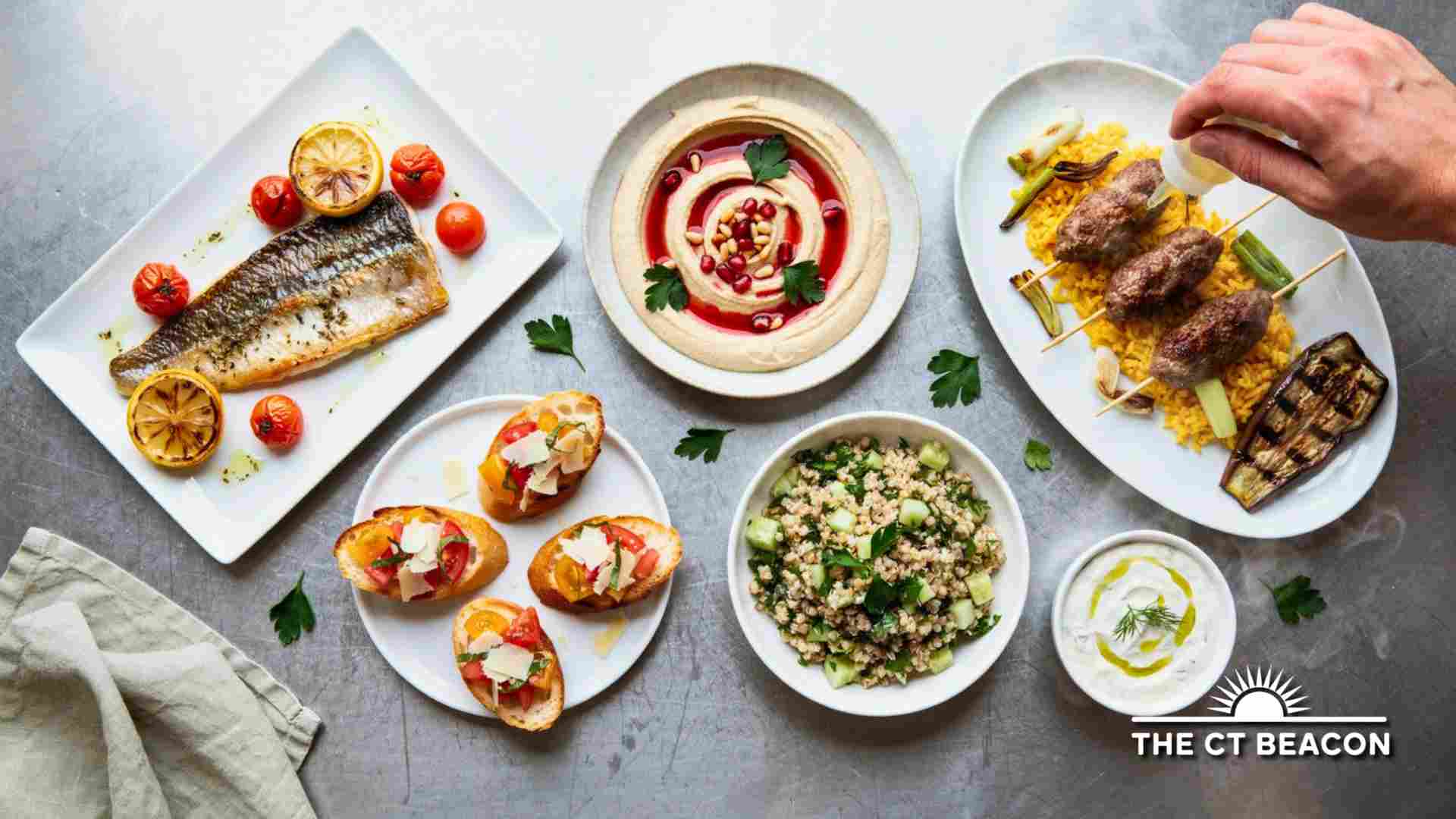
A Taste of the Mediterranean Comes to Kitch Mystic for a Hands-On Cooking Class on Friday evening, with Chef Amanda leading a small group through roasted cauliflower with whipped feta, rosemary chicken, farro, seasonal vegetables, and an orange olive oil cake before everyone sits down together for dinner.
The three-hour Seasonal Mediterranean class takes place Sept. 18 from 6 to 9 p.m. inside Kitch at Olde Mistick Village. Rather than watching someone else cook from across the room, participants will divide into small groups and take responsibility for different parts of the night’s five-course menu.
Chef Amanda moves between the groups, offering individual instruction and occasionally bringing everyone together when a technique or step is worth demonstrating to the entire class.
By the end of the night, the cutting boards and pans give way to plates and wine glasses as everyone gathers around Kitch’s Farm Table to eat the meal they’ve just prepared.
In that sense, the class may accidentally capture one of the oldest ideas behind Mediterranean cooking: making dinner is only half the point.
A Menu Built Around the Mediterranean Table
There isn’t really one “Mediterranean cuisine.”
The Mediterranean touches Southern Europe, North Africa and the Middle East, encompassing dozens of regional and national cooking traditions. But ingredients including olive oil, grains, vegetables, fruits, herbs and nuts appear again and again, alongside more moderate amounts of fish, dairy and meat.
The Mediterranean diet is culturally significant enough that UNESCO has placed it on its Representative List of the Intangible Cultural Heritage of Humanity. The designation isn’t for a particular recipe or prescribed diet plan. Instead, UNESCO describes a collection of knowledge and traditions involving growing, harvesting, fishing, preserving, preparing and, crucially, sharing food.
Eating together is central to it.
That makes Kitch’s format particularly appropriate. The evening begins with people cooking in groups and ends with those same people sharing what they’ve made around one table.
Friday’s menu starts with roasted cauliflower topped with whipped feta, pomegranate, toasted almonds and fresh parsley. It’s a dish that hits several familiar Mediterranean notes at once: vegetables at the center of the plate, salty cheese, fruit, nuts and herbs rather than a heavy sauce doing all the work.
The main course moves toward rustic comfort food with a whole chicken roasted with garlic and rosemary. A lemon-herb pan jus brings acidity back to the plate, while toasted farro pilaf and roasted root vegetables with toasted pine nuts fill out the meal.
Farro itself has ancient roots around the Mediterranean. The term is commonly used for hulled wheat varieties that have been eaten for centuries, particularly in Italy, where the grain still turns up in soups, salads and side dishes. Its chewy texture and nutty flavor make it a natural partner for roasted vegetables and herbs.
Dessert keeps olive oil on the table.
Instead of relying solely on butter, the class will prepare an orange olive oil cake finished with honey mascarpone and candied citrus. Olive oil cakes are particularly associated with Mediterranean baking traditions, where the region’s defining cooking fat can move just as easily into sweets as it does into a skillet.
It’s a menu that doesn’t attempt to recreate the cuisine of one particular Mediterranean country. Instead, it borrows the ingredients and habits that connect many of them.
More Than a Diet
The phrase “Mediterranean diet” can sound like something invented for the health section of a magazine, but its roots are considerably older than the modern nutrition movement.
The Mediterranean basin created a food culture shaped partly by geography. Olives thrive in its climate. Wheat and other grains became staples. Vineyards spread across the region. Coastal communities relied heavily on fishing, while vegetables, legumes, fruits, nuts and herbs became fixtures of everyday cooking.
UNESCO goes further than describing what’s on the plate. Its recognition of the Mediterranean diet encompasses the knowledge passed between generations, food production and preservation, cooking techniques, seasonal rhythms and the act of gathering for meals.
In fact, the word “diet” undersells the idea. Its root comes from the Greek diaita, referring more broadly to a way of life.
That’s why the communal part matters. In Mediterranean traditions, the table isn’t simply where calories are consumed after the cooking is finished. It’s where families and communities gather, stories get told and recipes survive because somebody eventually asks, “How did you make this?”
Kitch’s Friday night class compresses a little of that cycle into three hours: learn it, make it, sit down and share it.
Then take the recipes home.
Kitch Was Built Around Teaching People to Cook
Cooking classes aren’t an add-on to Kitch’s retail business. Teaching has been woven into the store from the beginning.
Owners Daniel and Lynne Price describe Kitch as the culmination of roughly two decades of their lives. The husband-and-wife team built the Olde Mistick Village shop around their shared interest in food, but each brought a different strength to it.
Daniel’s side is cooking and education. He teaches classes and has made informal instruction part of the store experience, whether that means explaining cookware or stopping for an impromptu demonstration on how to hold a chef’s knife or use a honing steel.
Lynne handles much of the merchandising and product curation, helping shape a store that deliberately leans away from the ordinary kitchen aisle. The couple travels to trade shows and farmers markets looking for unusual products, with an emphasis on locally produced and American-made cookware, cutlery, specialty foods and small-batch products.
Even Kitch’s hot sauce selection gets interactive: the store maintains a tasting bar stocked with more than 40 local and small-batch sauces for customers willing to test their heat tolerance.
The result is part kitchen store, part classroom and part gathering place.
Kitch’s calendar reflects that mix. Cooking and baking classes run alongside cocktail and mixology events, with themes changing constantly. One night might revolve around Mediterranean cooking; another around Italian food, steakhouse dishes, soups or seasonal New England ingredients.
And because Friday’s class is capped at just 10 participants, it remains small enough for Chef Amanda to move from station to station rather than trying to teach a roomful of spectators.
Everybody Has a Job
The structure of the class is worth knowing before arriving.
Participants aren’t expected to prepare the entire five-course dinner individually. Instead, Chef Amanda divides the class into groups, and each group works on part of the menu.
That makes a complicated dinner manageable while allowing participants to spend real time on particular techniques.
When something comes up that everyone should see, the class stops and comes together for a larger demonstration. Otherwise, Chef Amanda works directly with the smaller groups as they chop, roast, season and assemble their dishes.
Experience isn’t a prerequisite. Kitch’s classes are designed to accommodate different skill levels, so nobody needs restaurant-kitchen credentials to take part.
Once the last dish is ready, the cooking portion ends and dinner begins.
Participants gather at the Farm Table for the meal, accompanied by a complimentary wine tasting. Guests are also welcome to bring their own beverages.
And perhaps the most useful souvenir isn’t something from the shelves surrounding them. Everyone receives the evening’s recipes to take home.
So if that orange olive oil cake turns out to be the thing you’re still thinking about the next morning, you can make another one.
More information is available at the Event Website link below.
To purchase tickets, click the Event Ticketing link below.
Details
Event: Seasonal Mediterranean Cooking Class
Date: Friday, Sept. 18, 2026
Time: 6–9 p.m.
Location: Kitch Mystic at Olde Mistick Village
Address: 27 Coogan Blvd., Building 19A, Mystic, CT 06355
Instructor: Chef Amanda
Admission: $115 per person, plus tax
Age: 21 and older
Class Size: Minimum of eight and maximum of 10 participants
Format: Hands-on group cooking followed by dinner around Kitch’s Farm Table
Wine: Complimentary wine tasting included; guests may also BYOB
Recipes: Participants receive recipes from the class to take home
Menu: Roasted cauliflower with whipped feta, pomegranate, toasted almonds and parsley; garlic and rosemary roasted whole chicken with lemon-herb pan jus; toasted farro pilaf; roasted root vegetables with toasted pine nuts; orange olive oil cake with honey mascarpone and candied citrus
Reservations: Advance payment is required
Cancellation Policy: Cancellations must be made at least 24 hours in advance to receive a refund or credit. No-shows and no-calls forfeit the class fee. If Kitch cancels because minimum enrollment isn’t reached, participants may receive a refund or transfer their reservation to another class.
Phone: 860-980-3384
Featured image is an artistic representation inspired by the event and may not depict the actual people, location, or activities shown.