


- This event has passed.
Maritime Trades and Foodways Day Brings the Working Waterfront of the 1800s Back to Life
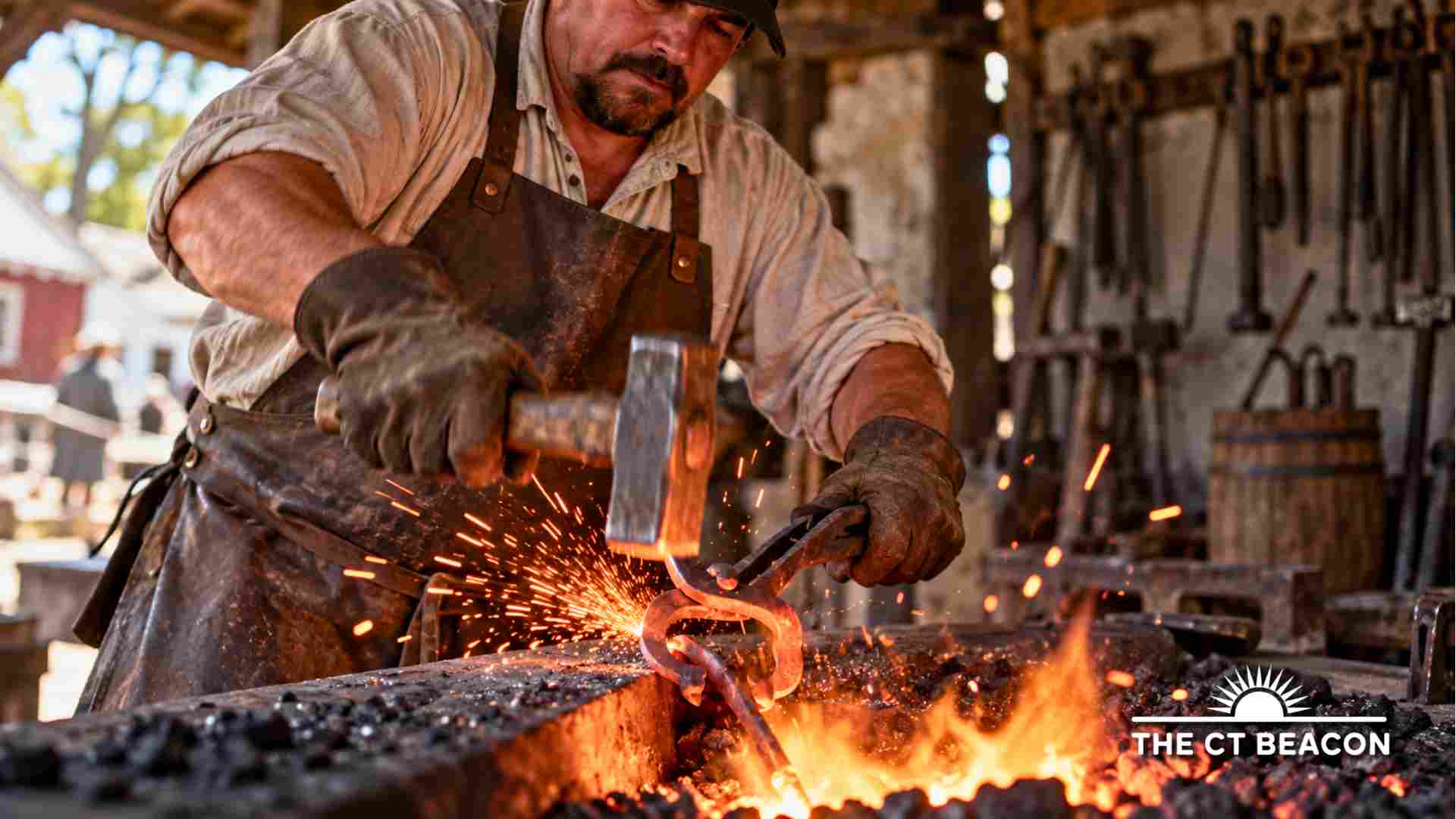
Maritime Trades and Foodways Day Brings the Working Waterfront of the 1800s Back to Life. Saturday, Sept. 26, as Mystic Seaport Museum fills its historic village with blacksmiths, coopers, sailmakers, cooks, printers and craftspeople demonstrating the skills that once kept ships at sea and maritime communities running.
The special event runs from 10 a.m. to 5 p.m. and is included with regular Museum admission.
Some of these trades are demonstrated regularly at Mystic Seaport Museum. Saturday goes considerably further, bringing additional craftspeople into the village, opening up skills visitors don’t ordinarily get to see and putting greater emphasis on how all those individual jobs connected to everyday life along a 19th-century waterfront.
That means the clang of a blacksmith’s hammer, wood being shaped into barrels, canvas being stitched into sails and food cooking over an open hearth.
It also means discovering what on earth steam bending, caulking, and coopering actually are.
Before Cardboard Boxes, There Was the Cooper
A wooden barrel doesn’t look like revolutionary technology now. Two centuries ago, it was indispensable.
Coopers made wooden casks from individual staves held together by hoops, without the modern adhesives we’d expect to find holding a container together.
Those casks were the shipping containers of their time.
Ships used them to carry water and provisions as well as flour, potatoes, apples and other cargo. On whaling vessels, barrels had an even more valuable job: storing the whale oil that made the voyage profitable.
The distinction between barrels mattered. A “tight cooper” produced watertight casks for liquids including spirits, molasses and whale oil, while “slack” casks could carry dry goods.
Whaleships even carried a cooper as a regular member of the crew. He assembled casks as they were needed and could be held responsible if the valuable oil inside them leaked.
Saturday’s demonstrations include both the Museum’s coopering program and guest cooper John Cox.
The Skills That Kept a Wooden Ship Alive
Other demonstrations reveal just how much specialized labor went into maintaining a vessel before steel hulls, synthetic rope, electric tools and modern engines changed maritime work.
Visitors can watch blacksmithing, wood carving, printing and sailor skills, along with several trades that Mystic Seaport Museum says are rarely demonstrated for the public.
Among them are sailmaking, canvas stitching, millinery, costuming and caulking.
Caulking was essential to wooden ships. Seams between hull planks had to be packed and sealed to keep seawater on the correct side of the vessel.
Sailmaking was its own highly specialized craft.
Mystic Seaport Museum’s Charles Mallory Sail Loft preserves that history. Before standardized sail plans became common, sailmakers measured a vessel’s masts and yards, created their own scaled patterns and drew the enormous sail outlines directly onto the loft floor. Canvas was cut to shape, sewn together and strengthened with rope stitched around its edges.
The loft itself has Mystic roots. Charles Mallory arrived in Mystic in 1816 after completing a sailmaking apprenticeship in New London. He eventually became one of Connecticut’s prominent shipowners as Mystic’s shipbuilding and whaling industries expanded.
And Then There’s Steam Bending
One of Saturday’s more unusual demonstrations answers a question many visitors may never have thought to ask: How do you make a straight piece of wood curve without breaking it?
Steam bending uses heat and moisture to make wood temporarily flexible enough to bend into a desired shape.
For wooden shipbuilding, that’s enormously useful.
A vessel is essentially a collection of curves, yet trees generally don’t arrive at a shipyard shaped like hull frames. Steam allows shipwrights to persuade wood into forms it would resist when dry.
It’s the kind of process that makes more sense after seeing it happen than after reading about it, which is precisely the point of the day.
History You Can Smell
The “foodways” half of the event moves the history into the kitchen.
Open-hearth cooking demonstrations will recreate the methods used before modern ovens and stovetops turned cooking temperatures into something controlled with a dial.
Among Saturday’s guest participants is Silvermoon LaRose of the Tomaquag Museum, who will cook over the open hearth in the Museum’s Buckingham-Hall House.
LaRose is a member of the Narragansett Tribe and assistant director of the Tomaquag Museum in Exeter, Rhode Island, bringing an Indigenous perspective into a day examining the people, food and traditions of the region’s maritime communities.
The cooking demonstrations also help connect maritime history to something broader than ships.
A working port needed shipwrights and sailors, but it also needed farmers, cooks, merchants, craftspeople and families. Food had to be grown, preserved, transported and prepared both ashore and aboard vessels that could remain away from home for months or years.
That’s where “foodways” becomes history rather than simply cooking.
A First Look at the New Season of SeaClass
The day also includes the fall premiere of Season 2 of SeaClass: The Maritime Classroom, Mystic Seaport Museum’s digital learning series.
Visitors will be among the first to see the opening episode of the new six-part season, which turns its attention toward historic maritime trades.
The first season focused on 19th-century whaling, examining subjects including why Americans hunted whales, the role of women in whaling, navigation, whaling tools and large artifacts from the industry. In June, the series received a Silver Telly Award in the Education and Learning category.
SeaClass isn’t limited to video. The Museum also uses the name for hands-on classes that let adults learn skills including open-hearth cooking, letterpress printing, woodworking, knot tying, astronomy, music and scrimshaw.
Saturday effectively brings that philosophy into the historic village on a much larger scale.
Mystic Seaport Museum is already filled with buildings, ships and artifacts from America’s maritime past. Maritime Trades and Foodways Day concentrates on something those objects can’t do by themselves: showing how people actually used them.
More information is available at the Event Website link below.
To purchase admission, click the Event Ticketing link below.
Details
Event: Maritime Trades and Foodways Day
Date: Saturday, Sept. 26, 2026
Time: 10 a.m.–5 p.m.
Venue: Mystic Seaport Museum
Address: 75 Greenmanville Avenue, Mystic, CT 06355
Admission: Included with regular Mystic Seaport Museum admission
Featured Trades: Printing, coopering, blacksmithing, wood carving, sailor skills and open-hearth cooking
Special Demonstrations: Sailmaking, canvas stitching, millinery, costuming, caulking and steam bending
Guest Tradespeople: John Cox, guest cooper; Silvermoon LaRose of the Tomaquag Museum
Special Program: Fall premiere of Season 2 of SeaClass, including the first episode of the new six-part season
Parking: Free Museum parking is available across Greenmanville Avenue from the Museum grounds
Museum Hours: 10 a.m.–5 p.m.; grounds close at 6 p.m.
Featured image is an artistic representation inspired by the event and may not depict the actual people, location, or activities shown.